
Fleas in Lexington, SC: Life Cycle, Health Risks, and How to Get Rid of Them for Good
Lamp's Pest Solutions | Lexington, SC
If your dog suddenly won't stop scratching, or you've found itchy bites around your own ankles, fleas are the likely culprit. In Lexington's warm, humid climate, a handful of fleas hitching a ride on a pet can turn into a full-blown infestation within weeks. This guide covers how the flea life cycle actually works, why store-bought sprays usually fail, the real health risks fleas pose to your family and pets, and how Lamp's Pest Solutions gets rid of fleas for good in Lexington, Columbia, Cayce, Red Bank, West Columbia, Gilbert, and Batesburg-Leesville, SC.
The Flea Life Cycle: Why They Keep Coming Back
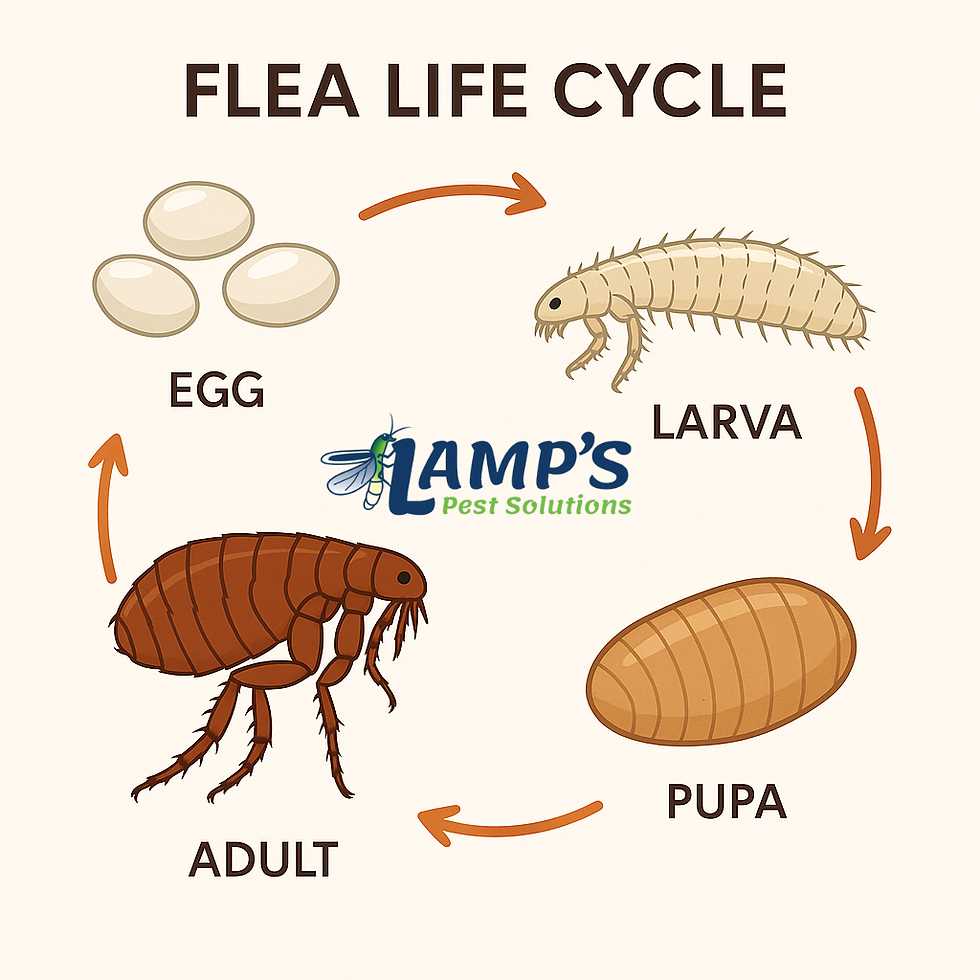
A flea's life has four distinct stages, and each one behaves differently and needs different treatment. That's the main reason a single can of spray never finishes the job.
1. Eggs
Adult female fleas lay eggs after feeding on a host, averaging around 27 eggs per day once egg-laying ramps up, and up to 800 over her lifetime, per NC State and Texas A&M AgriLife Extension.
Eggs are tiny, white, and nearly invisible. They aren't sticky, so they fall off your pet into carpets, furniture, bedding, and shaded outdoor areas as your pet moves around.
In warm (75–85°F), humid conditions, like a South Carolina summer, eggs hatch in as little as 1 to 10 days.
2. Larvae
Larvae are tiny and worm-like, and they avoid light, burrowing deep into carpet fibers, soil, and cracks in flooring.
They feed on "flea dirt," the dried blood waste adult fleas leave behind, along with other organic debris.
This stage typically lasts 4 to 18 days, but can stretch far longer in poor conditions, before larvae spin a cocoon and enter the pupal stage.
3. Pupae
The pupa is the hardest stage to treat. Inside a protective, debris-covered cocoon, fleas are highly resistant to sprays and vacuuming.
If not disturbed, fleas can stay dormant in the cocoon for as long as several months, sometimes up to 6 months.
Vibration, warmth, and carbon dioxide from a passing pet or person can trigger the flea to emerge, which is why fleas seem to "come back" weeks after a home looks clean.
4. Adult Fleas
Adult fleas emerge hungry, with powerful legs that let them jump up to 7 to 8 inches vertically to reach a host.
Once they find a host, they begin feeding and reproducing within a day or two, restarting the entire cycle.
Here's why over-the-counter sprays fall short: at any given time, a typical flea population is roughly 50% eggs, 35% larvae, 10% pupae, and only about 5% adults. A spray that kills adult fleas on contact is only ever touching the 5% you can actually see, while the eggs, larvae, and pupae hiding in your carpet keep the cycle going.
How Bad Is It? (Flea Activity Scale)
Sign | What It Means | Urgency |
Occasional bites on ankles | A pet may have picked up a few fleas outdoors | Low |
Pet scratching regularly | Fleas are established on your pet and likely in bedding | Medium |
Visible fleas jumping, flea dirt in fur | An active infestation is underway indoors | High |
Heavy infestation, pet lethargic or pale gums | Possible flea-related anemia, especially in young or small pets | Emergency – see a vet and call us |
Are Fleas Actually Dangerous? The Health Risks
Flea allergy dermatitis: flea saliva triggers an allergic reaction in many dogs and cats, causing intense itching, hair loss, and hot spots. It's one of the most common skin diseases in dogs in the U.S., according to the Merck Veterinary Manual.
Tapeworms: pets can pick up Dipylidium caninum tapeworms by swallowing an infected flea while grooming. Signs include weight loss and small, rice-like segments near the tail.
Cat scratch disease: fleas spread Bartonella henselae bacteria between cats, and an infected cat can pass it to people through a scratch or bite. The CDC estimates roughly 12,000 Americans are diagnosed with cat scratch disease each year.
Murine typhus: a rare flea-borne illness that, per CDC data, is concentrated mainly in Texas, southern California, and Hawaii. It isn't a common concern in South Carolina, but it's a reminder that fleas can carry more than just an itch.
Anemia in pets: a heavy flea infestation can cause enough blood loss to lead to anemia, especially in puppies, kittens, and small or elderly pets. Pale gums or lethargy are signs to get your pet to a vet right away.
Where Fleas Hide Indoors & Outdoors
Indoors:
Pet bedding and upholstery
Carpet edges and under furniture
Cracks in wood or tile flooring
Outdoors:
Shaded soil, under decks, or porches
Pet resting and sunning spots in the yard
Leaf litter and mulch near the foundation
Why DIY Flea Sprays Fall Short
Over-the-counter sprays usually kill adult fleas on contact but do nothing to eggs, larvae, or pupae hidden in carpets and cracks. Vacuuming helps, but pupae in their cocoons are largely resistant to it too. That's why professional treatment paired with homeowner follow-through gets much better, longer-lasting results than DIY alone.
Lamp's Proven Flea Control Process
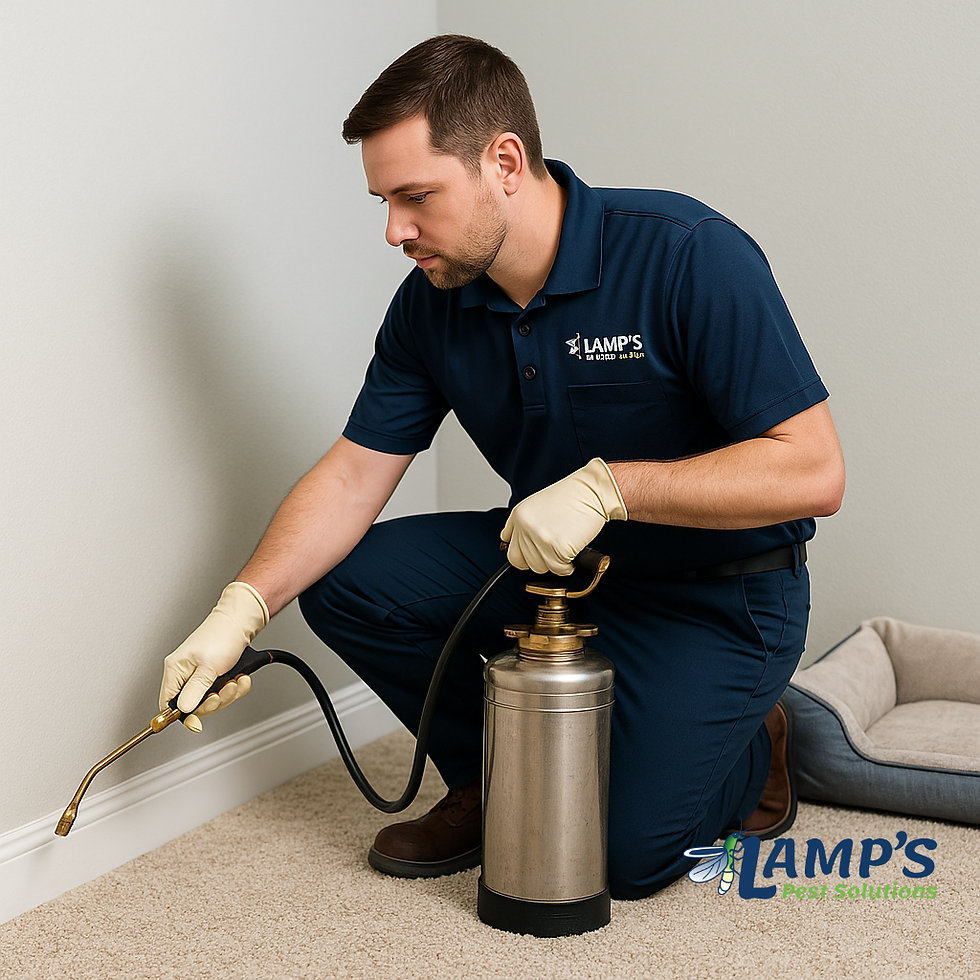
Inspection & consultation: we walk your home with you to find where pets rest, where activity is heaviest, and how long it's been going on.
Insect growth regulator (IGR): we apply a professional-grade IGR that prevents eggs and larvae from developing into biting adults, breaking the cycle at the source.
Adult flea elimination: targeted treatment on floors, carpets, and pet resting areas, safe for the household once dry, but tough on contact.
Indoor and outdoor coordination: we treat outdoor hotspots too, since flea populations often thrive under decks and in shaded, sandy soil across Lexington and Red Bank yards.
Homeowner guidance: vacuum daily for two weeks, wash pet bedding in hot water, and keep up with your vet's flea prevention for your pets.
How Long Does Flea Treatment Take to Work?
Because of the flea's multi-stage life cycle, full control typically takes about 2 to 3 weeks. Eggs and pupae already in the environment continue to hatch during this window, but they're quickly eliminated by the residual product and IGR already in place.
60-Day Half-Price Warranty
If fleas return within 60 days of your treatment, we'll retreat your home at half price. That's our commitment to keeping your home flea-free and your pets comfortable.
How to Prevent Fleas From Coming Back
Keep pets on a vet-approved flea preventive year-round
Vacuum carpets and furniture regularly, especially where pets rest
Wash pet bedding weekly in hot water
Keep grass mowed and remove leaf litter near the foundation
Schedule routine pest control visits to catch new activity early

Frequently Asked Questions
How long does a professional flea treatment last?
Our treatment provides residual control for several weeks, breaking the life cycle and preventing reinfestation.
Can fleas live in my bed or couch?
Yes. Fleas and their eggs commonly hide in bedding, furniture, and carpet fibers, which is why our treatment covers these areas.
What should I do before my flea treatment appointment?
Vacuum floors and carpets, wash pet bedding, and clear clutter so our technicians can reach every area that needs treatment.
Do I need to leave home during treatment?
No. We just recommend people and pets stay off treated areas until dry, typically one to two hours.
Are your products safe for kids and pets?
Yes. Once dry, our treatments are safe for families and pets while remaining effective against fleas.
Why do fleas seem worse right after treatment?
Newly hatched fleas from cocoons become more active as they emerge, which can look like things are getting worse before they get better. Those fleas die quickly once they contact the treatment.
Do you treat outdoor areas too?
Yes, when needed. Shaded, moist outdoor areas like under decks and porches are common flea hotspots in South Carolina yards.
Do you offer a warranty on flea treatments?
Yes. We include a 60-day half-price warranty, so if fleas return in that window, we'll retreat your home at half the cost.
Don't Let Fleas Take Over Your Home
Fleas move fast, and the longer they're left alone, the harder they are to clear out. Lamp's Pest Solutions is rated 5.0 stars on Google from 349+ reviews, and we bring the same care to every flea treatment in Lexington and the surrounding Midlands.
📞 803-414-0588
Lamp's Pest Solutions
316 Corley Street, Lexington, SC 29072
Serving Lexington, Columbia, Cayce, Red Bank, West Columbia, Gilbert, and Batesburg-Leesville, SC.
Sources
NC State Extension, "Biology and Control of Fleas"
Texas A&M AgriLife Extension, "How to Get Rid of Fleas"
Merck Veterinary Manual, "Flea Allergy Dermatitis in Dogs and Cats"
CDC, "Cat-Scratch Disease" and "About Flea-borne Typhus"


Comments