
- Home
- Pest Library
- Stinging Insects
Pest Library
Wasps, Hornets & Stinging Insects in Lexington, SC
How to tell them apart, where they nest, and when it’s time to call a professional.
5.0 on Google · 360+ Reviews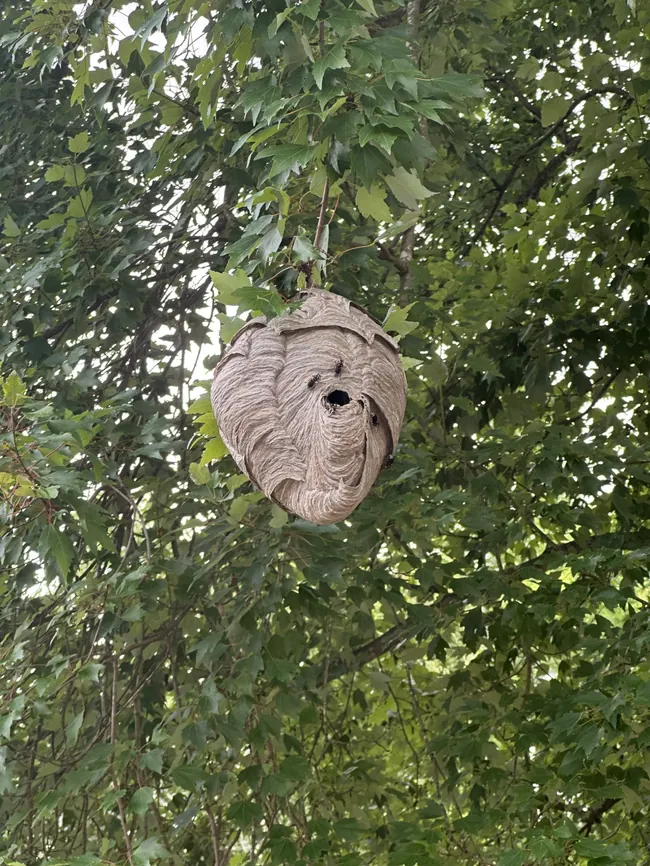
Found an active nest?
Talk to a local, owner-led company, not a call center. Every visit follows the standards Rick set.
Call Lamp’s: (803) 414-0588Identify: What Am I Actually Looking At?
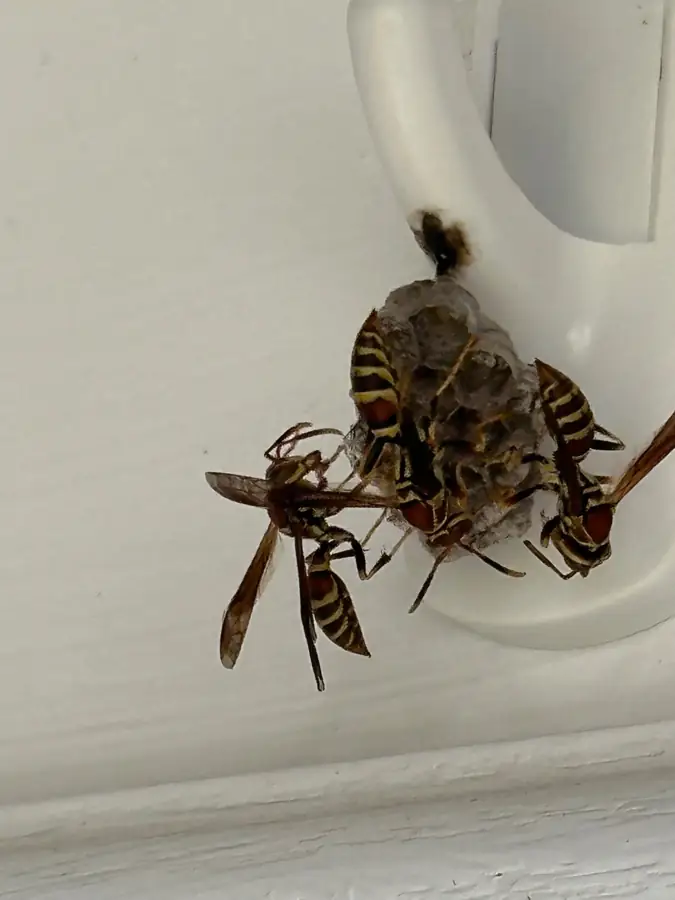
- Paper wasps — build open, umbrella-shaped nests under eaves, railings, or in shrubs.
- Bald-faced hornets — build large, enclosed paper nests in trees or on structures.
- European hornets — active at night, often nesting in tree cavities or wall voids.
- Yellow jackets — frequently nest in the ground or inside wall voids.
- Cicada killers — large solitary wasps that burrow into bare or sandy soil.
- Mud daubers — solitary wasps that build small mud-tube nests under eaves or in garages.
- Miner and digger bees — solitary, ground-nesting bees that are generally not aggressive.
- Red velvet ants — solitary wasps (despite the name) found in open, sandy areas, capable of a painful sting.
A quick note on shape and location: an open, umbrella-shaped nest under an eave is almost always paper wasps. A large, fully enclosed gray paper nest in a tree or on a structure is a hornet. Activity going in and out of a hole in the ground, a wall, or a block foundation usually means yellow jackets.
How Lamp’s handles it: See Stinging Insect Control for how we handle wasp and hornet nests.
Understand: Why Nests Show Up Where They Do
Nest location is the biggest clue to species — and it’s also what usually determines how dangerous a nest is to approach. A ground or wall-void nest (yellow jackets) is far easier to disturb by accident — mowing, stepping near a wall vent, weed-eating — than a wasp nest you can see from across the yard.
Social species — paper wasps, hornets, yellow jackets — build up colony size over the warm season. A nest that looked small and quiet in early summer can be noticeably larger, and more actively defended, by late summer and into fall. That’s the general pattern, not a guarantee for every nest.
Most stings happen when a nest is disturbed without anyone realizing it’s there — a hidden ground nest, a nest tucked inside a grill or shed, or one inside a wall void. Repeated insect traffic going to and from one specific spot is usually the nest announcing itself before anyone gets close enough to get stung.
Found a nest near your home?
Talk to a local, owner-led company, not a call center. Every visit follows the standards Rick set. Consultations are free.
Act: What Lamp’s Stinging Insect Service Includes
Stinging insects can be genuinely dangerous to remove yourself, especially with an unknown allergy in the household or a nest that’s already grown large. If you’ve found an active nest, the safest move is to leave it alone and call rather than approaching it yourself.
Because every situation is different — the species, where the nest is, and how large it’s gotten — Lamp’s handles stinging insects as its own specialty service, scheduled separately from Quarterly Pest Control rather than bundled into it. It starts with a free consultation, then an on-site assessment to confirm the species and locate the nest, then a tailored treatment with the approach and pricing explained before anything happens. Treated nests carry a 60-day warranty within 20 feet of the original nest site.
When are stinging insects most active?
Spring: carpenter bees start boring into wood, and paper wasps start new nests. Summer: yellow jacket and hornet colonies grow to full size. Late summer and fall: yellow jackets get more aggressive as food runs short, and cicada killers appear. Winter: most colonies die off, but new queens overwinter and start again in spring.
Stinging Insect Questions We Hear
What kind of nest is this?
An open, umbrella-shaped nest under an eave is almost always paper wasps. A large, enclosed gray paper nest in a tree or on a structure is a hornet. Traffic in and out of a hole in the ground, a wall, or a block foundation usually means yellow jackets.
Why is the nest bigger and more aggressive late in summer?
Paper wasps, hornets, and yellow jackets build up colony size over the warm season. That’s the general pattern, not a rule for every nest.
Found an Active Nest?
Talk to a local, owner-led company, not a call center. Every visit follows the standards Rick set. Free consultations, honest recommendations, and local service you can count on. Request online and we’ll call you back from (803) 414-0588 as soon as possible during business hours.
(803) 414-0588Get a Free Consultation
Talk soon. Rick & Moab